Why a Radon Reduction Guarantee Matters for Your Home
The Hidden Danger in Your Basement
I have spent years working in the St. Louis area, and I can tell you that radon is not a problem that sorts itself out. Many homeowners assume that because they cannot see or smell the gas, it is not there. But soil gas seeps through cracks in the foundation, and without a properly designed system, radon levels can climb well above the EPA action level of 4.0 pCi/L. The real challenge is not just installing equipment, it is making sure the system actually works long-term. That is where a radon reduction guarantee becomes more than a marketing phrase. It becomes a promise that the contractor stands behind the results.
When I first started in this field, I saw too many systems that looked good on paper but failed to lower radon levels consistently. A contractor would throw in a radon fan, run a radon vent pipe through the garage, and call it done. A month later the homeowner would test again and find levels still high. Without a radon reduction guarantee, the homeowner was stuck paying for another visit or a redesign. That is not fair, and it is not professional.
What a Real Radon Reduction Guarantee Includes
A meaningful radon reduction guarantee covers more than just parts. It covers the outcome. Air Sense Environmental, for instance, does not just sell radon mitigation systems. They test before installation, design the system based on the home's specific foundation and soil conditions, and then perform post-installation verification to confirm the radon level has dropped below the EPA guideline. The guarantee means that if the system does not achieve the promised reduction, the company returns to fix it at no extra charge.
This is a big deal because radon mitigation is not a one-size-fits-all process. Sub-slab depressurization works in most homes, but the placement of the suction point, the number of suction points, and the power of the radon fan all affect the outcome. A contractor who offers a radon reduction guarantee has to get those details right from the start, or they will end up coming back on their own dime. That incentive drives better design and installation.
Testing: The First Step That Many Skip
I have seen homeowners order a short-term radon test from a hardware store, leave it in the basement for three days, and then call a mitigation company based on that single reading. A short-term radon test can be useful for a quick screening, but it is not the full picture. Radon levels fluctuate with weather, season, and how often the home is ventilated. A long-term radon test, lasting 90 days or more, gives a much more reliable average.
Before any reputable contractor installs a system, they should conduct their own radon testing. Some use a continuous radon monitor that logs hourly readings. This device can show spikes that a short-term test might miss. For example, a home might test at 3.9 pCi/L in summer but jump to 8.0 pCi/L in winter when the ground freezes and soil gas is forced upward. A contractor who skips thorough testing is guessing. A radon reduction guarantee only works if the baseline is accurate.
System Design: More Than a Hole in the Floor
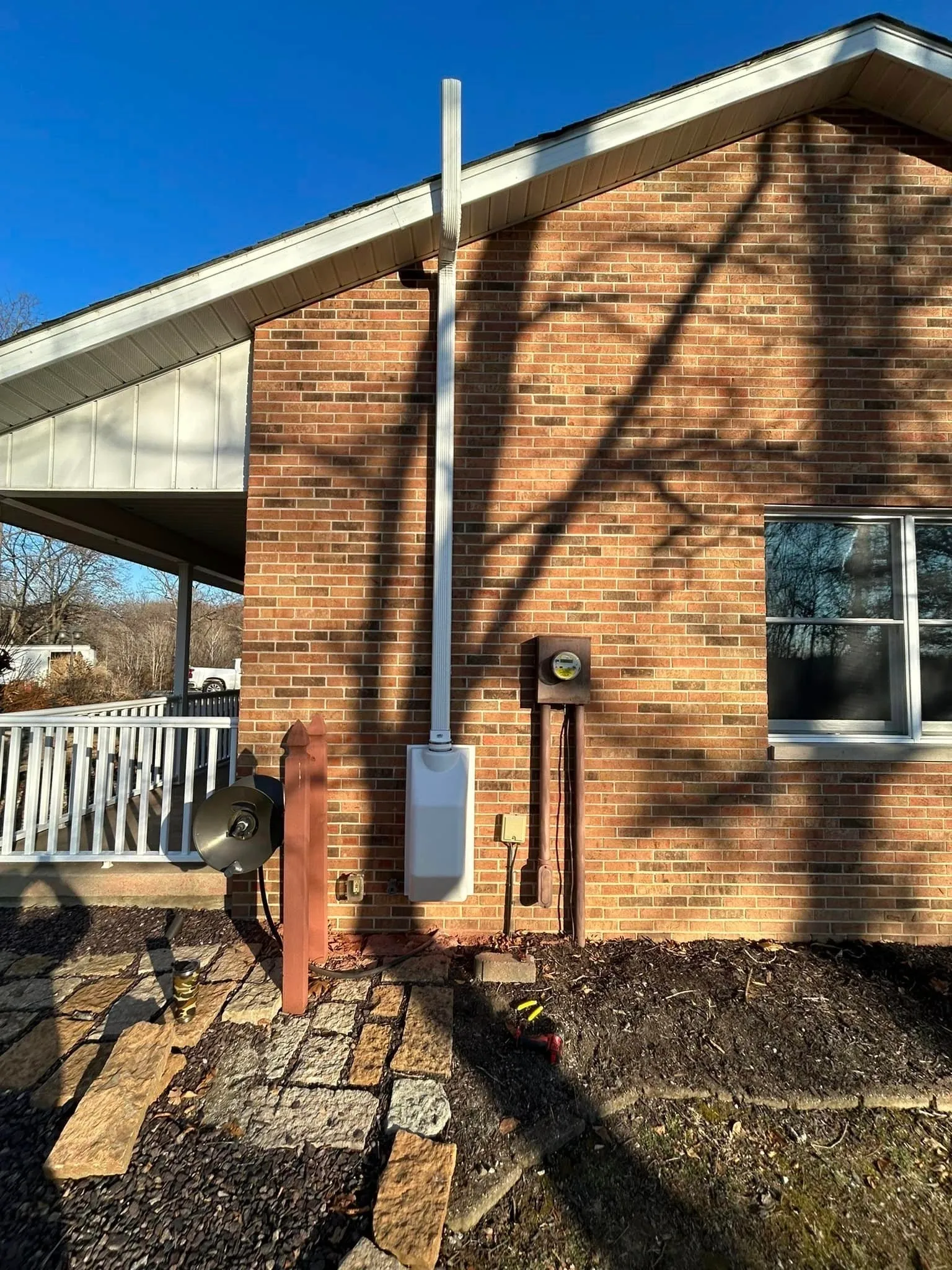
Once the testing is done, the design phase begins. The most common method in the St. Louis area is sub-slab depressurization. This involves drilling a hole through the basement floor, creating a cavity under the slab, and installing a radon vent pipe that runs up through the house and exits above the roofline. A radon fan is attached to the pipe to create negative pressure under the slab, pulling soil gas away from the foundation and venting it safely outside.
But the details matter. The fan must be sized correctly for the square footage and soil permeability. The pipe must be sealed with radon sealant at every joint to prevent leakage. A manometer should be installed on the pipe so the homeowner can see at a glance whether the system is maintaining negative pressure. If the manometer reads zero, something is wrong, a blockage, a fan failure, or a break in the pipe. Without that simple gauge, the homeowner has no way to know if the system is working.
An active radon system uses a fan, while a passive radon system relies on natural air pressure differences. Passive systems are often built into new homes during radon-resistant construction, but they are less reliable in existing homes with high radon levels. In most retrofits, an active system is necessary to meet the EPA guideline.
Post-Installation Verification: The Proof Is in the Numbers
After the system is installed, the contractor should perform post-installation verification. This is not the same as the initial test. It is a follow-up test, usually a short-term radon test or a continuous radon monitor reading, conducted after the system has been running for at least 24 hours. The goal is to confirm that the radon level has dropped below 4.0 pCi/L, or ideally even lower.
I have seen cases where the initial post-installation test showed 2.5 pCi/L, but a week later the homeowner tested again and got 4.5 pCi/L. Why? The radon fan might have been on the wrong speed setting, or the pipe had a small leak. A radon reduction guarantee forces the contractor to investigate and correct the issue without charging the homeowner another dime. That accountability is rare in home services, and it is worth seeking out.
The Role of a Radon Mitigation Warranty
A radon mitigation warranty and a radon reduction guarantee are related but not identical. A warranty typically covers defects in materials or workmanship for a set period, often five to ten years. If the radon fan fails within that time, the warranty covers replacement. But a radon reduction guarantee goes further. It promises that the radon level stays low, period. If the system stops performing, even if the fan is still running, the contractor fixes it.
Some companies offer a performance guarantee for the first year, then a standard warranty afterward. That is reasonable, because the first year is when the system settles in and the homeowner learns how to maintain it. But I recommend asking any potential contractor whether they offer a radon reduction guarantee that covers ongoing testing. A few will even provide a free short-term radon test every year to verify the system is still working.
Why St. Louis Homeowners Should Care
The St. Louis area sits on a mix of limestone, shale, and glacial till, geology that can produce significant radon levels. The EPA has mapped much of the region as Zone 1, meaning average indoor radon levels are predicted to be above 4.0 pCi/L. I have tested homes in the city and suburbs where initial readings exceeded 10 or even 20 pCi/L. Those are dangerous levels that require immediate action.
A radon reduction guarantee gives St. Louis homeowners peace of mind that the money they spend on radon mitigation is not wasted. It also protects them from contractors who cut corners. I have seen systems where the radon vent pipe was run through an unheated attic and froze in winter, blocking the airflow. I have seen radon fans mounted too close to bedrooms, creating a low-frequency hum that kept the homeowners awake at night. A contractor who offers a guarantee has to think through these details because they know they will be on the hook if the system fails.
What to Look for in a Mitigation Contractor
If you are shopping for a radon mitigation system, ask these questions:
- Do you perform a pre-installation radon test, and do you use a continuous radon monitor or a short-term radon test?
- What is your radon reduction guarantee, and how long does it last?
- Do you include a manometer with the system so I can monitor pressure?
- What type of radon sealant do you use on the pipe joints?
- Do you provide post-installation verification with a written report?
These questions help separate a thorough contractor from one who just wants to get in and out. A company like Air Sense Environmental, which focuses on radon mitigation in the St. Louis area, should be able to answer each one clearly. If they hesitate or give vague answers, that is a red flag.
The Bottom Line
Radon mitigation is not cheap. A typical active radon system costs between $800 and $2,500 depending on the complexity of the installation. That is a significant investment for any homeowner. A radon reduction guarantee ensures that the investment pays off. It transforms the transaction from a one-time sale into an ongoing relationship where the contractor has a vested interest in the system's performance.
In my experience, the best contractors treat radon mitigation as a science, not a commodity. They test thoroughly, design carefully, and verify the results. They stand behind their work with a radon reduction guarantee that is written clearly in the contract. If you are dealing with a radon problem in your home, do not settle for less. The health of your family is worth the extra effort to find a contractor who truly guarantees the outcome.
Radon is a serious health risk, but it is a manageable one. With proper testing, a well-designed active radon system, and a contractor who offers a real radon reduction guarantee, you can bring your radon level down to a safe range and keep it there. That is not just good business, it is peace of mind.